Two dates on food packages mean different things. Which one is about safety (turvallisuus)?
Ruokapakkauksessalukeeusein “parastaennen” tai “viimeinenkäyttöpäivä”.Neeivättarkoitasamaaasiaa.Jostunneteron, tiedätparemmin, voikoruokaavieläkäyttää.Samallavoitvälttääturhaaruokahävikkiä.
On food packaging it often says “best before” (parasta ennen) or “use-by date” (viimeinen käyttöpäivä). They do not mean the same thing. If you know the difference, you know better whether food can still be used. At the same time, you can avoid unnecessary food waste.
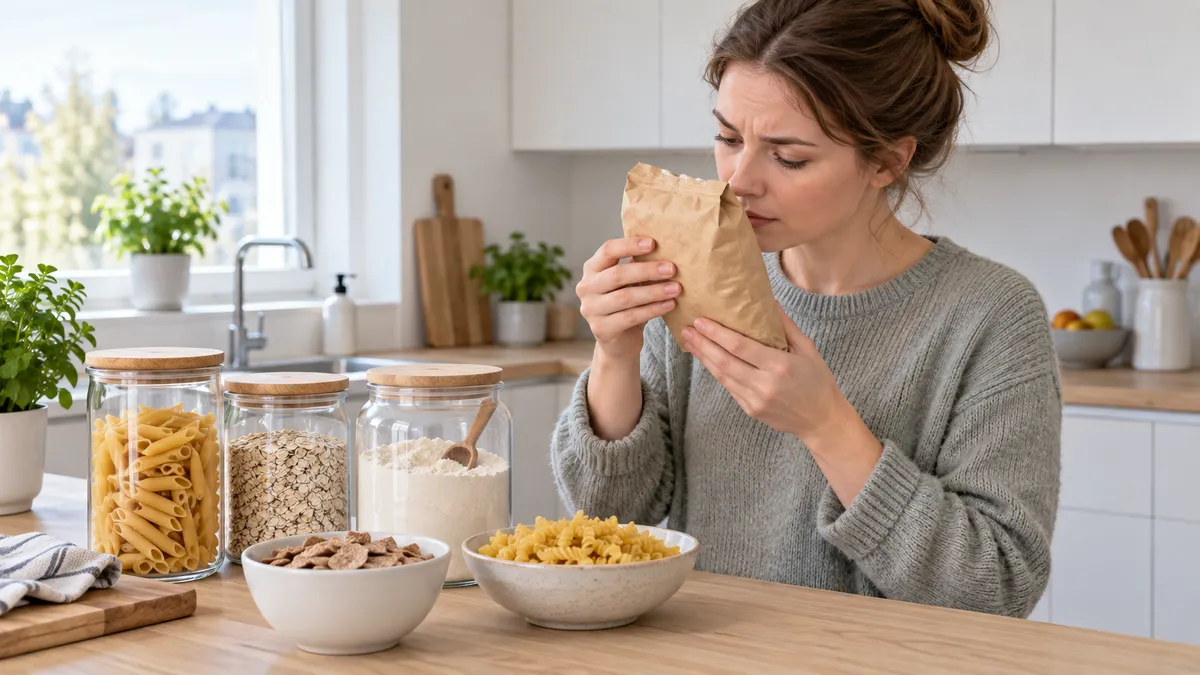
“Best before” tells above all about the product’s quality. After the date, the food is not automatically spoiled. For example, dry foods and many other products can often still be used later. Check the food with your own senses: look, smell, and if necessary taste a little. If the product looks, smells and tastes normal, it can usually be used.
“Use-by date” is instead connected with food safety. The marking is used on easily perishable products, for example minced meat and fresh fish. The product must be used no later than the date marked on the package. After that, it should no longer be eaten.
Let us think, for example, about a refrigerator. There is yogurt there whose best-before date was yesterday. If the yogurt looks and smells normal, it may perhaps still be eaten. There is also minced meat in the refrigerator whose use-by date was yesterday. It should no longer be used. Here the most important difference between the markings is visible.
Correct storage is also important. Read on the package whether the product should be stored, for example, in a refrigerator. If the use-by date is approaching, use the food in time. A suitable product can also be frozen before the use-by date. In this way, food does not need to be thrown away unnecessarily.
An easy rule to remember is this: best before usually tells about quality, use-by date about safety. After the best-before date, check the product. After the use-by date, do not use the product anymore. When you remember this difference, the dates on food packages are much easier to understand.
Word bank
Every word as it appears in the text, its base form, what the ending does, and the meaning.
Ruokapakkauksessa
on food packaging
noun
The singular of ruokapakkaus — the form you look up. It stands in Inessiivi (the inessive case).
eron
the difference
noun
The singular of ero — the form you look up. The ending -n marks Akkusatiivi (the accusative case).
ruokahävikkiä
food waste
noun
The singular of ruokahävikki — the form you look up. The ending -ä marks Partitiivi (the partitive case).
laadusta
about quality
noun
The singular of laatu — the form you look up. It stands in Elatiivi (the elative case).
pilalla
spoiled
adverb
kuiva-aineita
dry foods
noun
The plural of kuiva-aine — the form you look up. The ending -ita marks Partitiivi (the partitive case).
aisteillasi
with your senses
noun
The plural of aisti — the form you look up. It stands in Adessiivi (the adessive case).
normaalilta
normal
adjective
The singular of normaali — the form you look up. The ending -lta marks Ablatiivi (the ablative case).
turvallisuuteen
to safety
noun
The singular of turvallisuus — the form you look up. It stands in Illatiivi (the illative case).
pilaantuvissa
in perishable products
adjective
The plural of pilaantuva — the form you look up. It stands in Inessiivi (the inessive case).
jauhelihassa
in minced meat
noun
The singular of jauheliha — the form you look up. The ending -ssa marks Inessiivi (the inessive case).
viimeistään
no later than
adverb
merkittynä
marked
verb
syödä
to eat
verb
A verb in its basic form — the one a dictionary lists, before it is tied to a person.
jääkaappia
a refrigerator
noun
The singular of jääkaappi — the form you look up. The ending -a marks Partitiivi (the partitive case).
jogurtti
yogurt
noun
This is the dictionary form itself, standing in Nominatiivi (the nominative case).
säilytys
storage
noun
This is the dictionary form itself, standing in Nominatiivi (the nominative case).
säilyttää
to store
verb
A verb in its basic form — the one a dictionary lists, before it is tied to a person.
lähestyy
is approaching
verb
pakastaa
to freeze
verb
A verb in its basic form — the one a dictionary lists, before it is tied to a person.
muistisääntö
rule to remember
noun
This is the dictionary form itself, standing in Nominatiivi (the nominative case).
ymmärtää
to understand
verb
A verb in its basic form — the one a dictionary lists, before it is tied to a person.
Practice
Choose a way to practise this story.
Comprehension quiz
0/0
Question 1 of 4
What does “best before” mainly tell you about?
Question 2 of 4
What should you do with a product after its use-by date?
Question 3 of 4
Which examples does the reader give for products with a use-by date?
Question 4 of 4
If the use-by date is approaching, what does the reader suggest?
Fill in the gap
0/0
Sen jälkeen sitä ei pidä enää .
After that, it should no longer be eaten.
Sopivan tuotteen voi myös ennen viimeistä käyttöpäivää.
A suitable product can also be frozen before the use-by date.
Match the words
0/0
Pick a Finnish word, then pick its meaning.
Dictation
0/0
Ready to listen
Listen closely, then write the Finnish sentence you hear. You can listen again as many times as you need.
Enter to check or go to the next sentence · Shift + Enter for a new line