When we think about the sea, we often think about salty water. However, the water of the Baltic Sea is not as salty as ocean water. The Baltic Sea is a brackish-water area (murtovesialue). That means that there is both fresh water and salty water there. There are two important reasons for this. A lot of fresh water enters the Baltic Sea, but only a little salty water enters.
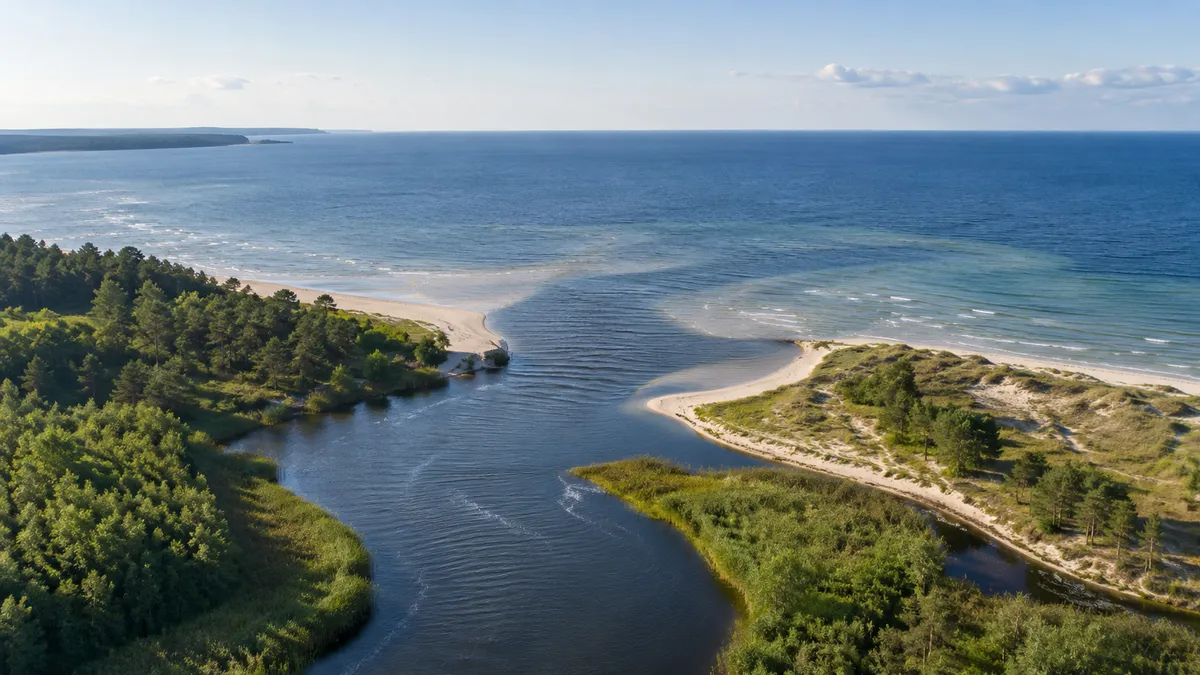
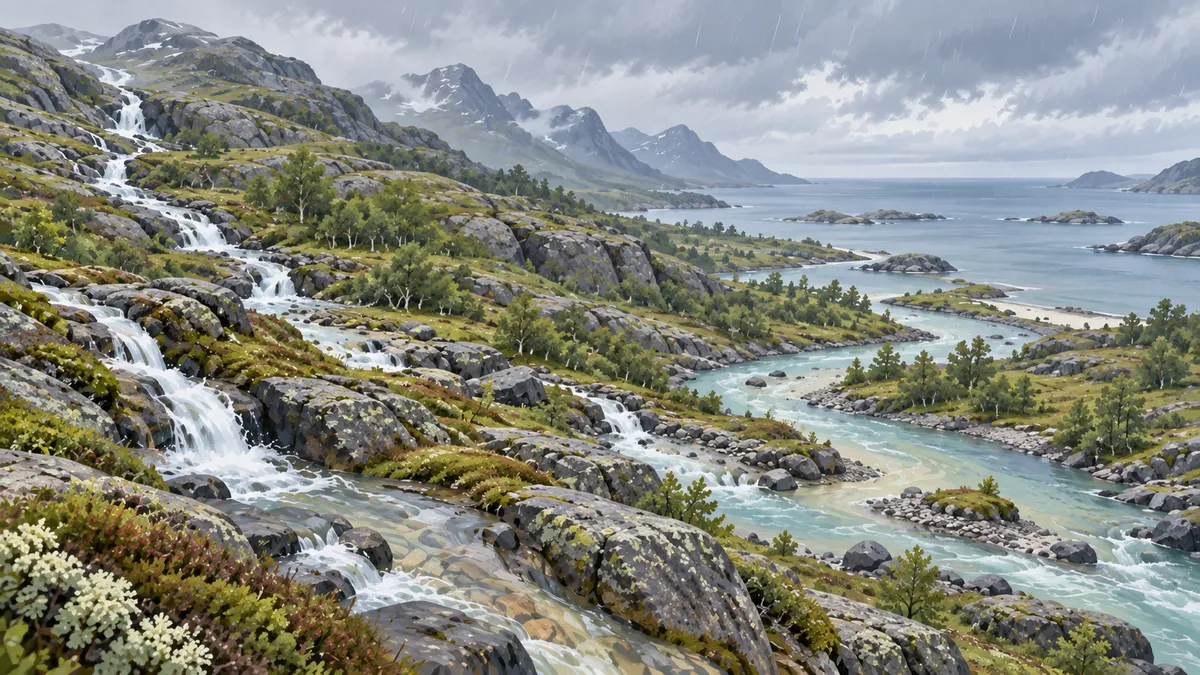
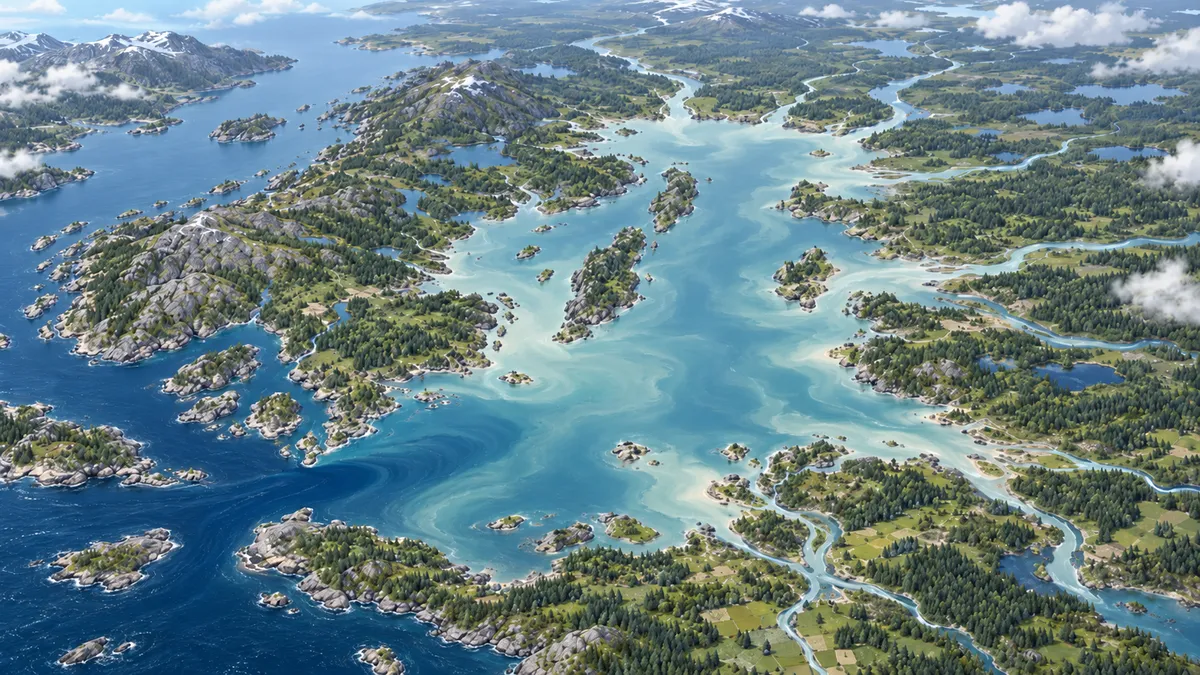
Around the Baltic Sea there is a very large land area. Rain and melting snow flow into streams, lakes, and rivers. The rivers eventually carry this water into the Baltic Sea. This large area is called a catchment area (valuma-alue). The Baltic Sea catchment area is more than four times larger than the sea itself. Therefore, a lot of fresh water enters the Baltic Sea.
River water is fresh water. It does not contain much salt. When rivers bring a lot of water into the sea, there is less salt in the seawater. This happens in the Baltic Sea all the time. In spring, a lot of snow melts, and even more water enters the rivers. Therefore, the surrounding land strongly affects the water of the Baltic Sea.
Salty water enters the Baltic Sea from the west, from the North Sea. The water has to pass through the Danish straits. The straits are narrow and fairly shallow. Therefore, salty seawater does not enter the Baltic Sea easily. Sometimes a strong wind brings more salty water into the Baltic Sea. However, this does not happen all the time.
The water is exchanged slowly in the Baltic Sea. According to HELCOM, the exchange of the whole volume of water takes about 30 years. During this time, rivers continuously bring new fresh water into the sea. Salty water comes from the North Sea more slowly. Therefore, the Baltic Sea stays fairly low in salinity for a long time.
The water of the Baltic Sea is not equally salty everywhere. Near Denmark, the water is saltier because the North Sea is nearby. In the central part of the Baltic Sea, the salinity of surface water is often about 7–8 psu. In the north and east, it can be only 0–2 psu. A lot of river water enters these areas. They are also far from the North Sea. Therefore, the water there is less salty.
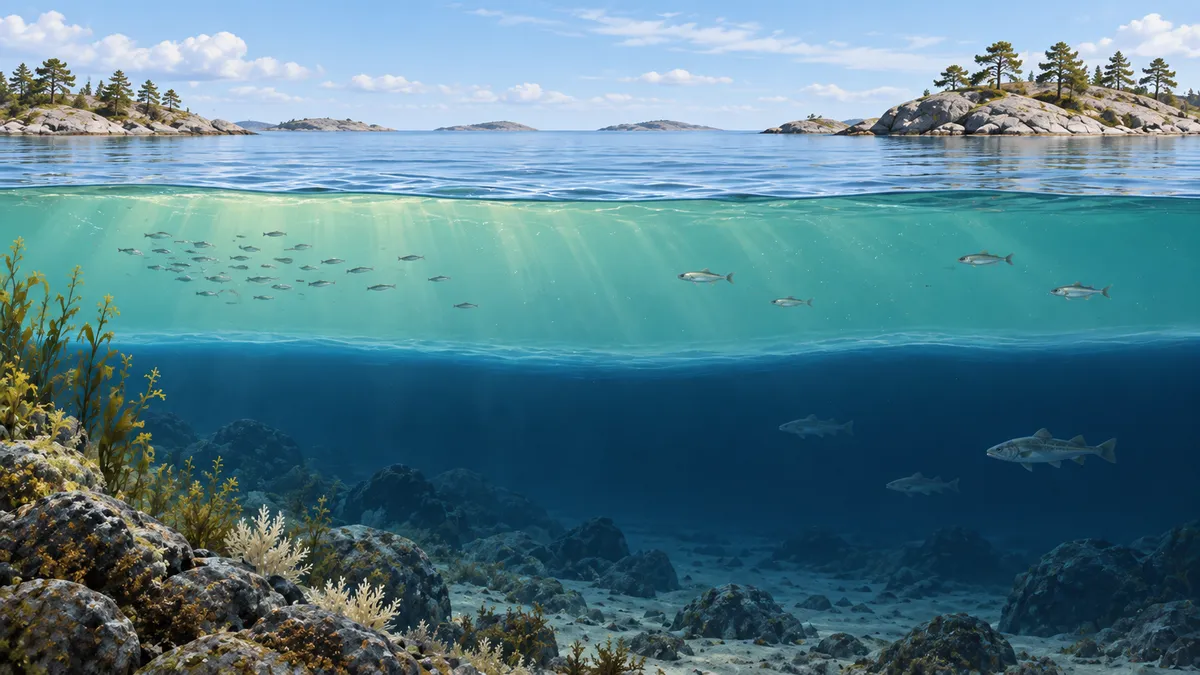
Saltier water is denser than less salty water. Therefore, it sinks more easily into the depths. Less salty water often stays closer to the surface. In this way, different water layers can form in the sea. Water at the surface can be less salty than water deep below. So the water of the Baltic Sea does not mix in the same way everywhere.
The Baltic Sea is slightly salty for two important reasons. First, rivers bring a lot of fresh water there. Second, salty water comes from the North Sea only through narrow straits. In addition, water is exchanged slowly in the Baltic Sea. Therefore, the effect of fresh water is large. For this reason, the Baltic Sea is much less salty than the ocean.
Word bank
Every word as it appears in the text, its base form, what the ending does, and the meaning.
murtovesialue · noun · nominative singular
brackish-water area
Go to this word in the text
tarkoittaa · verb · present indicative active, 3rd person singular
to mean
Go to this word in the text
makea · adjective · partitive singular
fresh; non-salty
Go to this word in the text
suolainen · adjective · partitive singular
salty
Go to this word in the text
syy · noun · partitive singular
reason
Go to this word in the text
puro · noun · illative plural
into streams
Go to this word in the text
viedä · verb · present indicative active, 3rd person plural
carry, take
Go to this word in the text
valuma-alue · noun · translative singular
as a catchment area
Go to this word in the text
suuri · adjective · comparative, nominative singular
larger
Go to this word in the text
jokivesi · noun · nominative singular
river water
Go to this word in the text
merivesi · noun · inessive singular
in seawater
Go to this word in the text
sulaa · verb · present indicative active, 3rd person singular
melts
Go to this word in the text
vaikuttaa · verb · present indicative active, 3rd person singular