Finland is located in Northern Europe and belongs to the Nordic countries. It has a land border with Sweden, Norway, and Russia. In the south and west, Finland is on the coast of the Baltic Sea. Finland is a long country from south to north. From southern Hanko to northern Utsjoki, the distance is about 1,157 kilometres. Therefore, there are clear differences in the nature of the south and the north.
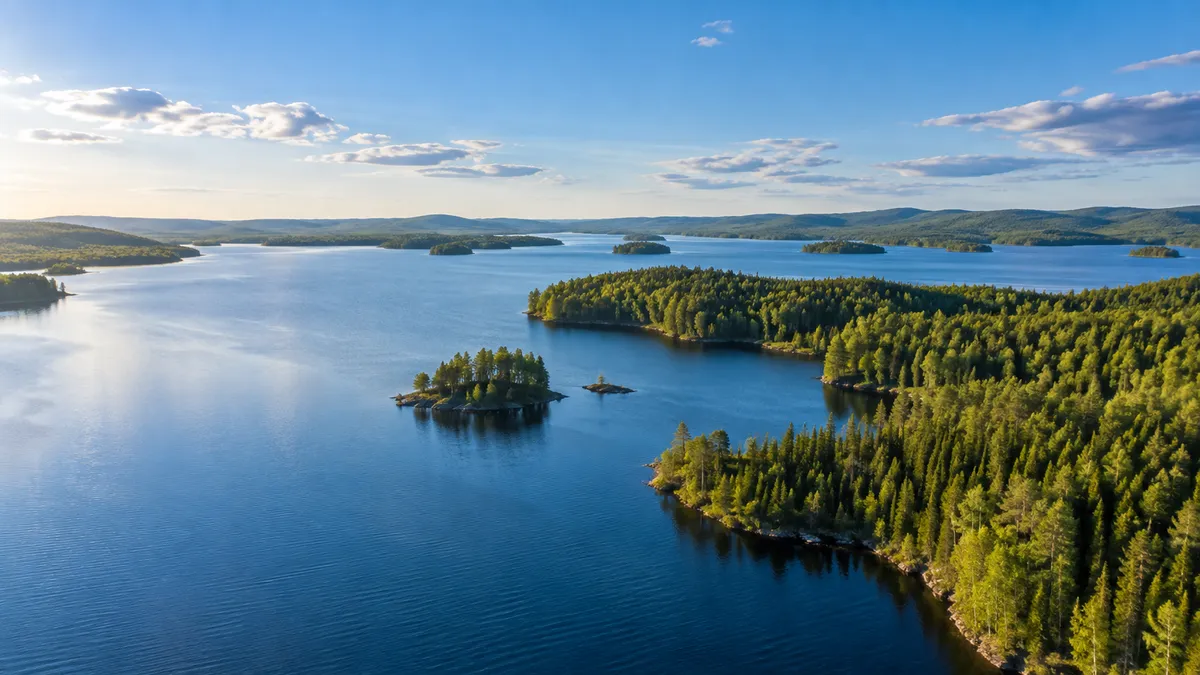
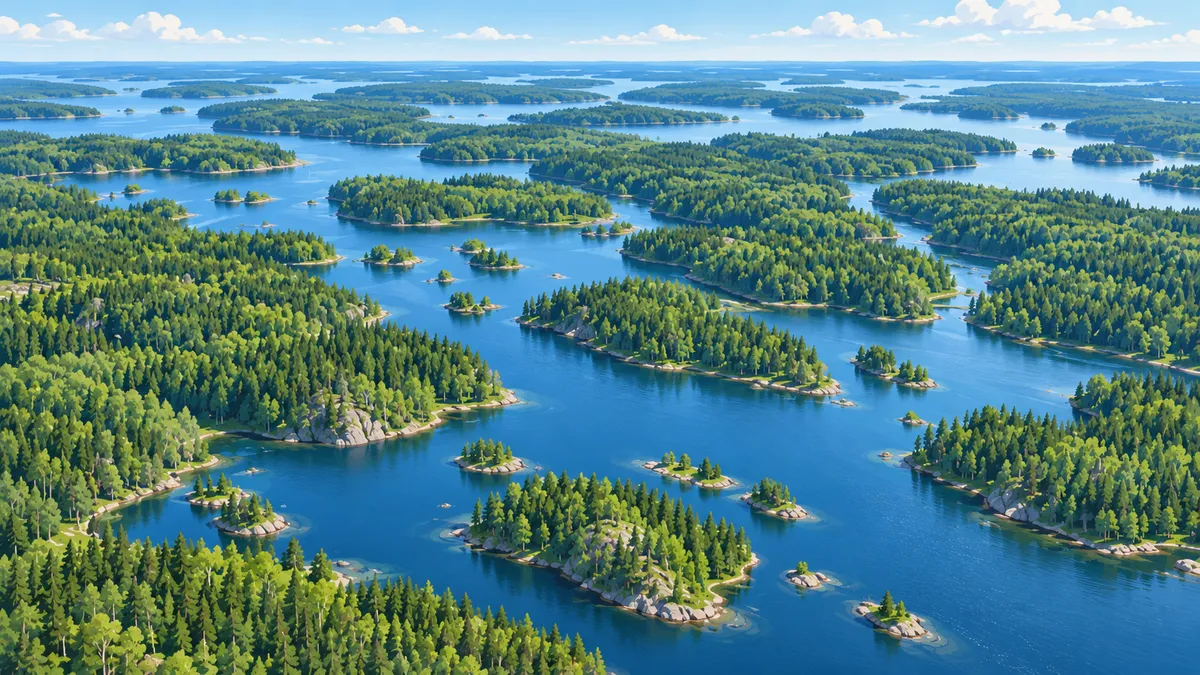
Finland is often called the land of thousands of lakes. Finland has an estimated 168,000 lakes of at least 500 square metres. Of them, the largest is Saimaa in Eastern Finland. In Central and Eastern Finland, especially many lakes can be seen. Rivers and streams run between the lakes. Water makes many Finnish landscapes very recognisable.
Forest can often be seen around the lakes. More than 70 percent of Finland's surface area is forest. In many forests, pine, spruce, and birch grow. Finland also has many mires and other wetlands. Forests, waters, and mires together form a typical Finnish landscape. The landscape can look green and blue in the same place.
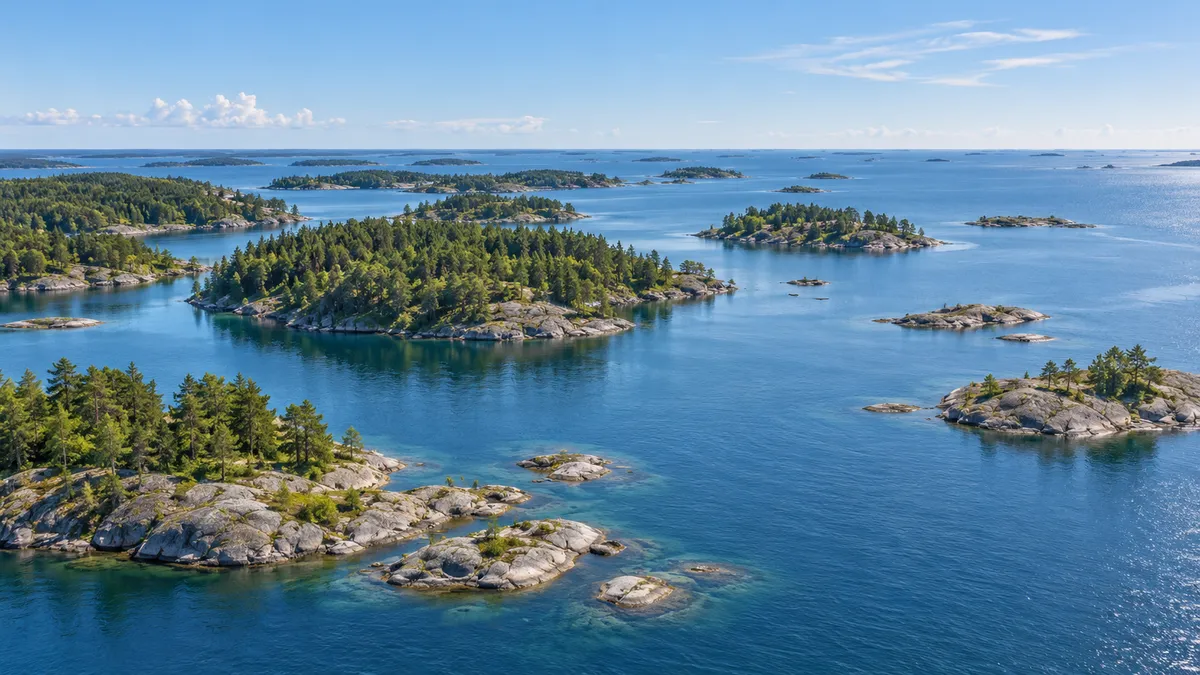
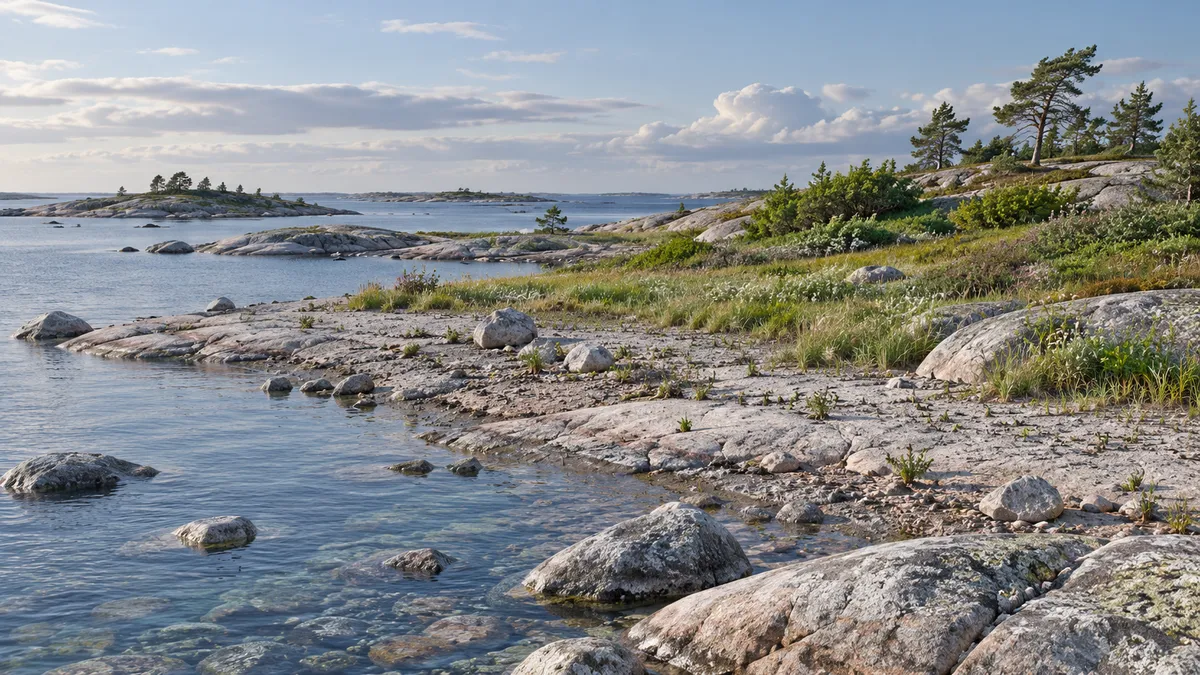
Finland's coast is long, and there are archipelagos off it. The archipelagos have thousands of islands, skerries, and small rocks. In Southwest Finland, the Archipelago Sea (Saaristomeri) is an important part of the landscape. On the coast, the sea meets forests, islands, and small skerries. The southern and western coast connects Finland to the Baltic Sea. Therefore, Finland's landscape includes both lakes and the sea.
Finland is not completely flat, but large mountains are absent. Most areas are fairly flat or gently rolling. Eastern Finland has higher hills than many other areas. In Lapland, the landscape includes rounded fells (tunturi). The tops of many fells are treeless. Halti is Finland's highest point, 1,324 metres above sea level.
The trace of the Ice Age is still visible in Finland's geography. Thick ice pressed the Earth's crust downward thousands of years ago. When the ice melted, the Earth's crust began to rise slowly. The uplift continues even today. In the Kvarken region (Merenkurkku), the land rises nearly one centimetre per year. Therefore, new land gradually emerges from the sea on the coast.
Finland's long north-south extent is also visible in the seasons. Winter begins in Lapland earlier than in the south. In Southwest Finland, winter lasts about 100 days. In Lapland, it lasts about 200 days. North of the Arctic Circle, the sun does not rise for part of the winter. In summer, there, by contrast, the sun does not set at all.
Finland's waters do not remain only in lakes. Streams flow into lakes, and from the lakes the water continues into rivers. Rivers eventually carry water to the Baltic Sea. In this way, the waters of the inland and the coast connect with each other. From south to north, the landscape changes many times. A journey from lakes to fells shows the country's many landscapes.
Word bank
Every word as it appears in the text, its base form, what the ending does, and the meaning.