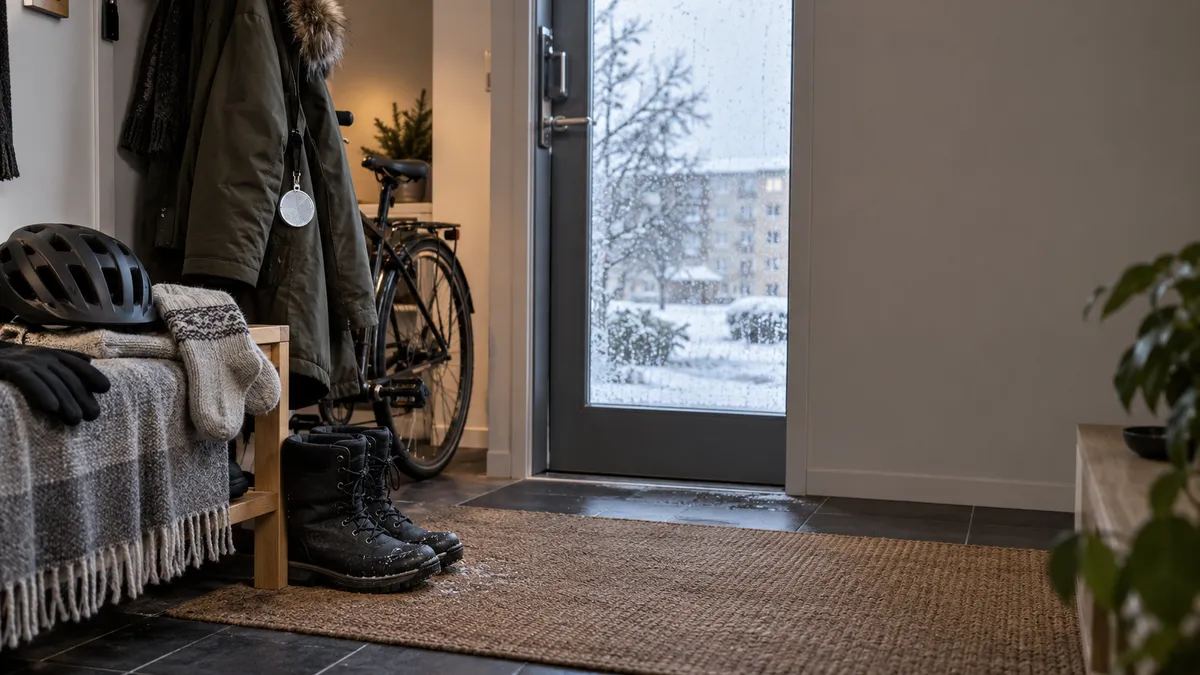
In Finland, winter does not begin everywhere at exactly the same time. In the high areas of Lapland, snow can fall already in early autumn. In Southern Finland, permanent snow usually comes much later than in Lapland. In winter, the temperature is often below zero, and the ground can be slippery. Therefore, it is worth preparing for winter already before the first frosty mornings. Autumn is a good time to check what there already is at home.
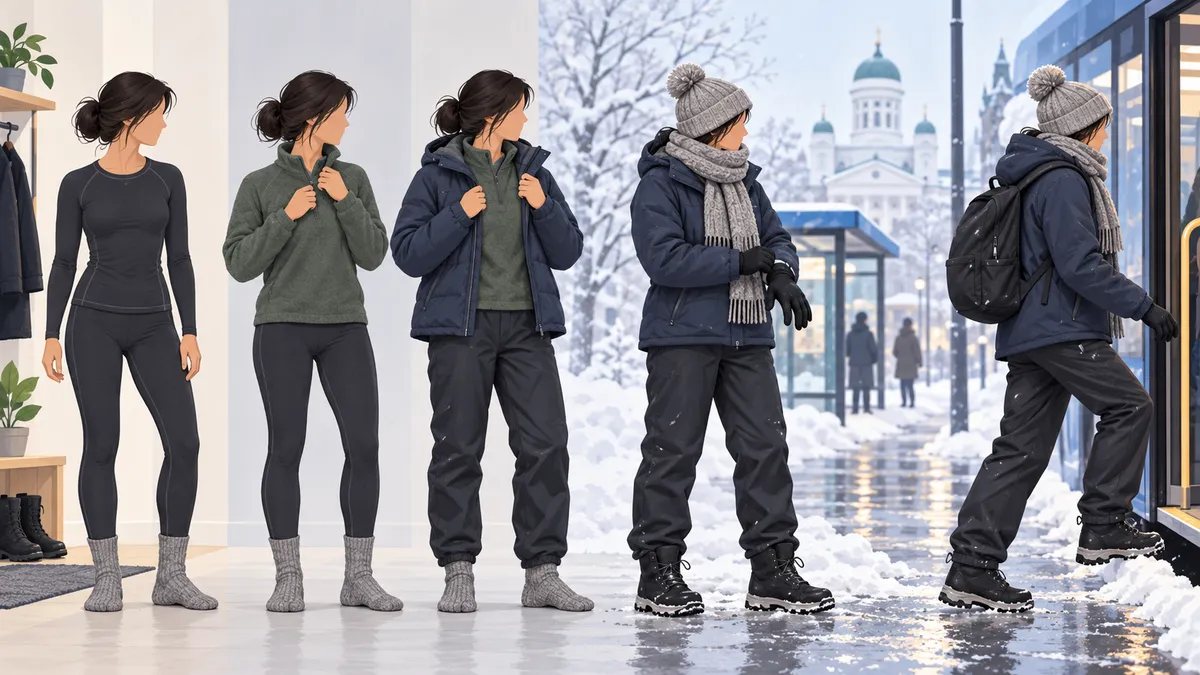
In cold weather, one thick garment is not always enough. Several clothing layers keep the body warmer than one layer. Clothing layers can be added or reduced easily during the day. The base layer keeps the skin dry and helps moisture move outward. Over the base layer, you can put on a wool sweater, fleece, or another warm layer. The outer layer protects from wind, wet snow, and rain. A winter coat, hat, scarf, and warm gloves belong to the basic equipment.
In winter, the legs need protection just as good as the upper body. As a base layer, long underwear or a warm thermal set are suitable in winter. Over the base layer, you can put on ordinary trousers or warm mid-layer trousers. As the outermost layer, you can put on windproof and waterproof trousers in wet weather. Wool socks or thermal socks help keep the toes warm outdoors. In wet snow, waterproof winter boots are a practical choice outdoors. There must be room in the shoe for thick socks, and it must not squeeze. The sole of a winter boot must grip well on snow and ice.
In winter, streets and yards can become very slippery. It can be especially slippery when snow falls on top of ice. Water on top of ice also makes the surface extremely slippery. A good winter boot needs a soft and properly patterned sole. In slippery weather, anti-slip devices can also be attached to shoes when needed. Follow the weather forecast and pedestrian-weather warnings before going outside.
In Finland in winter, it is often dark in the morning and afternoon. A reflector helps a driver see a pedestrian much earlier in the dark. In Finland, a pedestrian should generally use a reflector on a dark road. Attach a reflector to a coat or bag ready already in autumn. Several reflectors can be used, for example on both sides of the body. A reflective vest also improves visibility when moving in darkness and twilight.
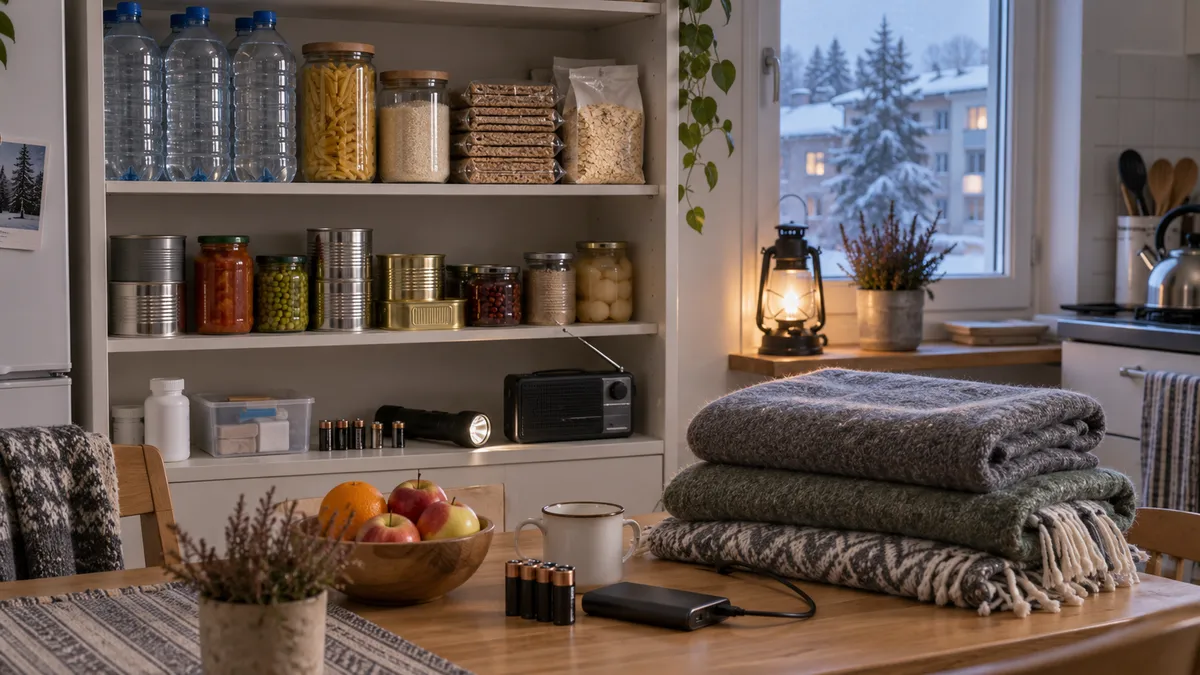
In winter, a power outage can cool a home quickly in severe frost. Therefore, it is worth putting together a home emergency supply already before winter. A home emergency supply includes water, food, medicines, and other essential items. They should be enough for all residents for at least three days. It is also worth getting a battery-powered radio and spare batteries for the home. A charged power bank helps if the phone cannot be charged from the wall.
Also keep warm blankets and easy-to-eat food at home. During a power outage, the dwelling can cool quickly in cold weather. If the home gets cold, it is easier to stay warm in one room. Windows can be covered with thick curtains or warm blankets. More rugs can also be brought onto the floor against the cold. Layered clothing also helps indoors if the heating does not work.
If you use a car, check the winter tyres well in advance already in autumn. Winter tyres must be used from the beginning of November to the end of March if the weather requires them. The tread depth of a passenger car's winter tyre must be at least three millimetres. It is worth changing the tyres before continuous near-zero weather and slippery mornings. At the same time, check the condition of the tyres and their required markings. Tyres in good condition are an important part of safe winter driving in Finland.
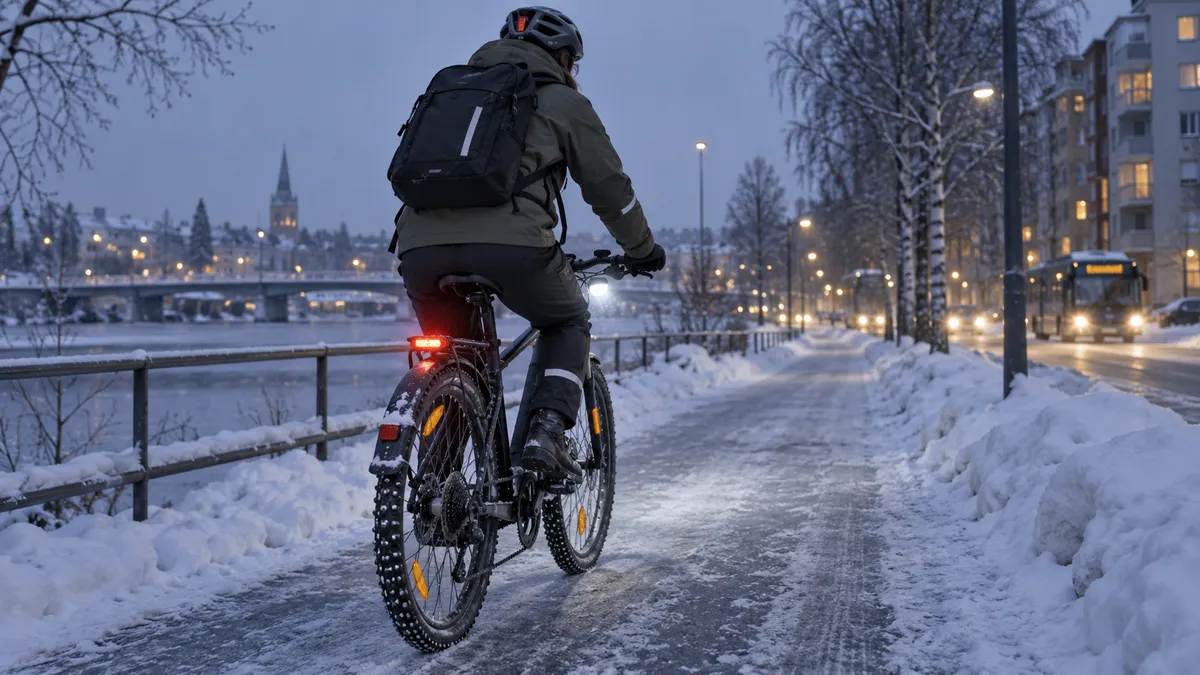
If you also use a bicycle in winter, make sure that the bicycle is in good condition and suitable for winter conditions. In winter, studded tyres clearly improve the bicycle's grip on a slippery road. At least on the front wheel, a studded tyre makes steering more stable on a slippery road. Before riding, also check the brakes and the tyre pressure. In the dark, you need a white or light-yellow front light and a red rear light. The bicycle must also have front, rear, and side reflectors. A helmet, warm gloves, and windproof clothing are important in winter. Waterproof outer clothing helps when it rains or wet snow falls.
In autumn, a small checklist makes preparing for winter much easier. Check warm clothes, winter boots, reflectors, and the home emergency supply in good time. If you drive, also check the winter equipment of the car or bicycle. Follow weather forecasts and slipperiness warnings when the temperature starts to fall. Everything does not need to be bought new before winter arrives. The most important thing is to know what you need and where the items are.
Word bank
Every word as it appears in the text, its base form, what the ending does, and the meaning.