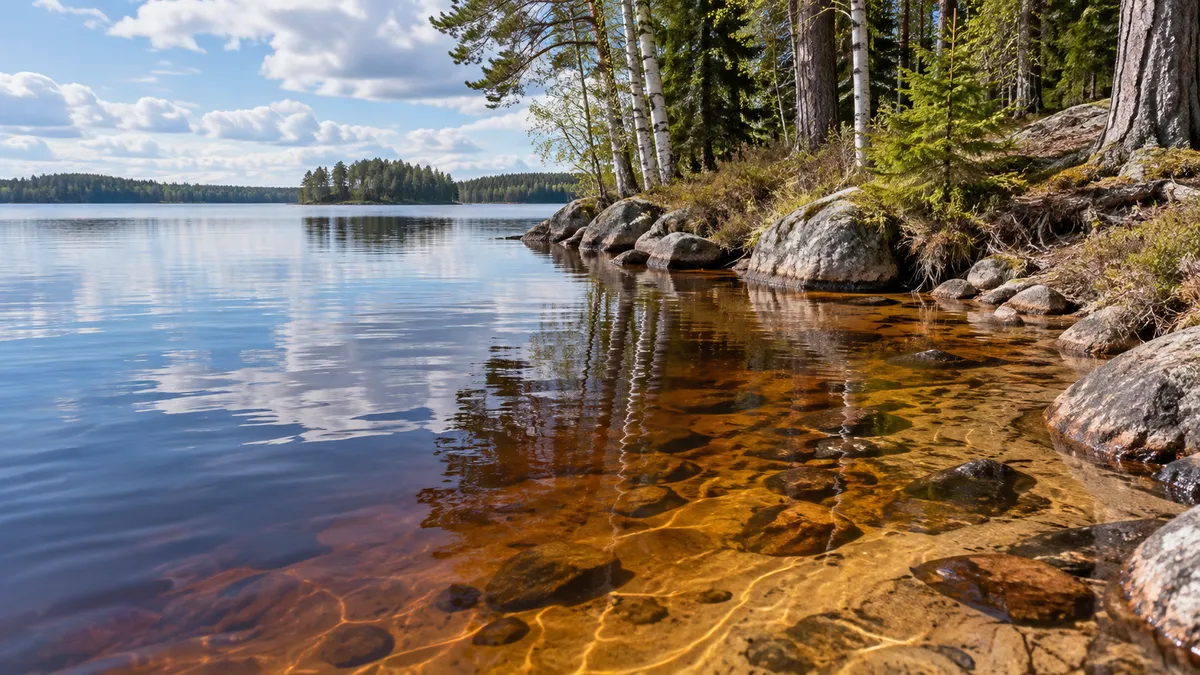
In Finland, lake water does not always look bright blue. The water of many lakes is slightly brown or tea-colored. The surface can still reflect the sky’s blue or gray color. When one takes water into a glass, the brown shade shows more clearly. The brown color in Finland’s lakes usually comes from humus.
In lake water, besides water, there are many substances coming from nature. Some of these substances change the color of the water. Humus forms from parts of plants that decompose slowly in the soil. It forms in especially large amounts in bogs and other peatlands. Therefore humus is a common substance in many waters in Finland.
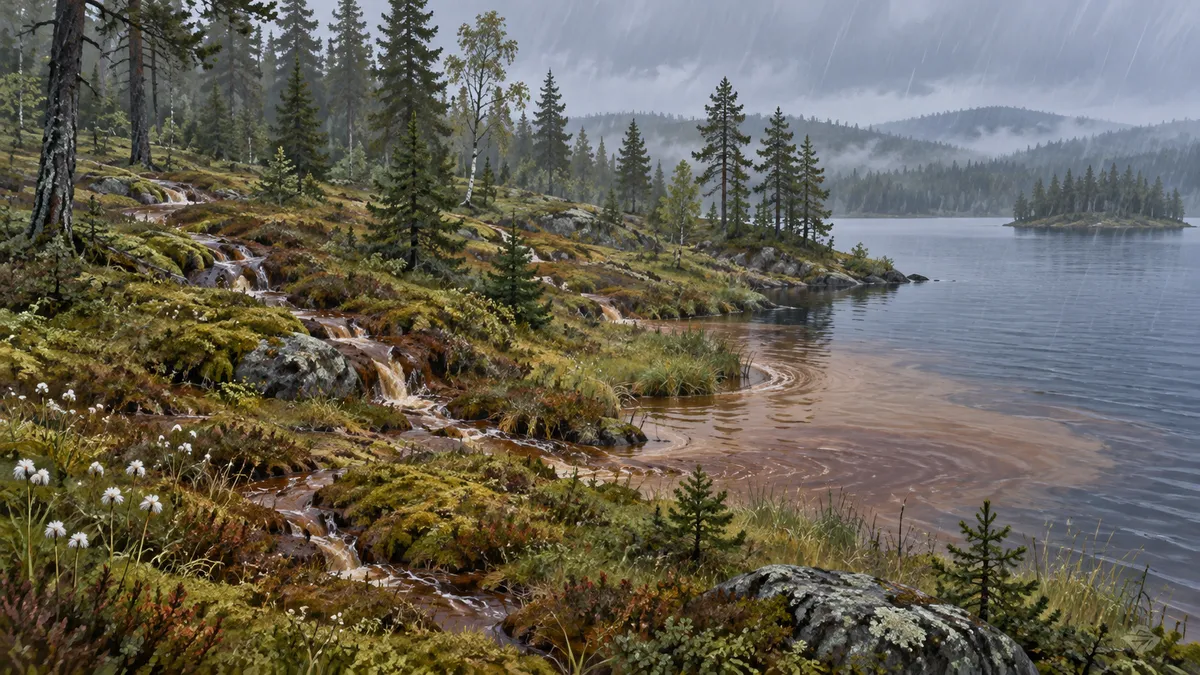
Humus comes into the lake from the surrounding catchment area with rainwater. When it rains, water flows along the ground surface toward the lake. Rainwater takes soil humus with it on the way to the lake. Water carries the humus into streams, rivers, and finally lakes. The surrounding land therefore directly affects the color of the lake water.
In lakes surrounded by bogs, there can be especially much humus. Then the water can look clearly brown or dark. The strength of the brown color is not always the same. Weather and the season change the amount of humus coming into the lake. Therefore the color of the same lake can vary during the year.
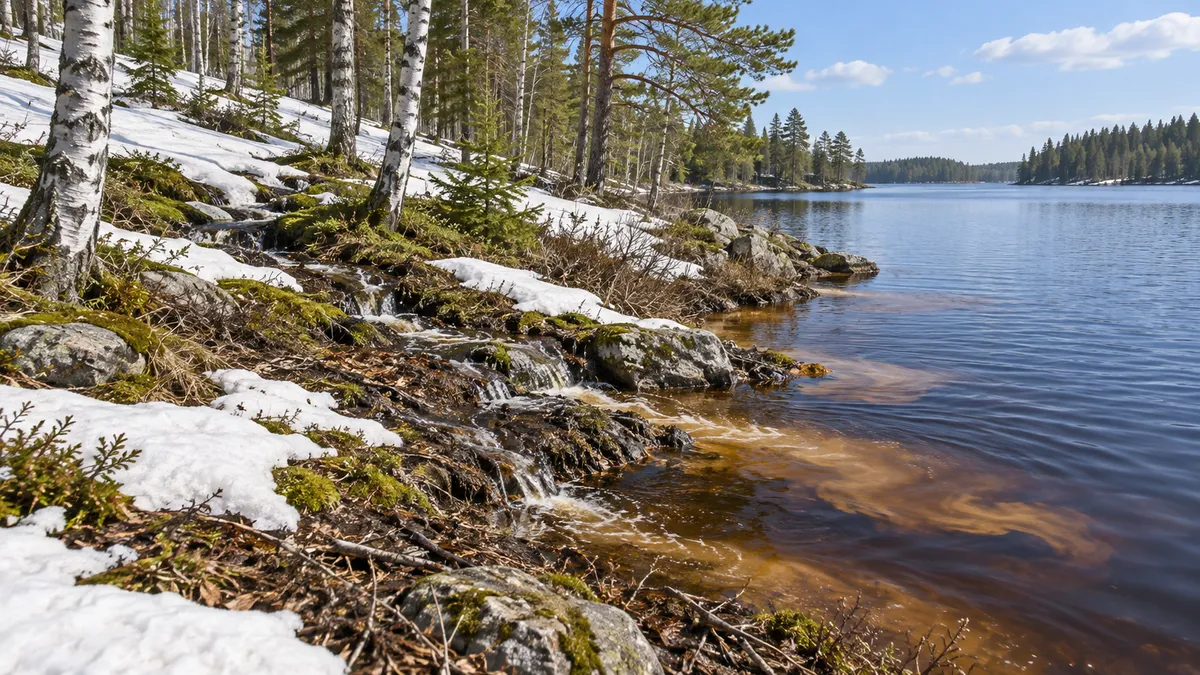
After rain, more humus than usual can be carried into the lake. The same often happens in spring, when snow begins to melt. Then water carries more humus than usual from the land into the water body. The lake’s brown color can, because of this, become stronger. After a rainy period, the water can therefore look darker.
Human activity can also increase the amount of humus in the water. For example, ditch drainage changes the flow of water in the lake’s catchment area. When land is dug and worked, more humus can come loose. Then rainwater carries it more easily toward the lake. The water can, because of this, become browner than before.
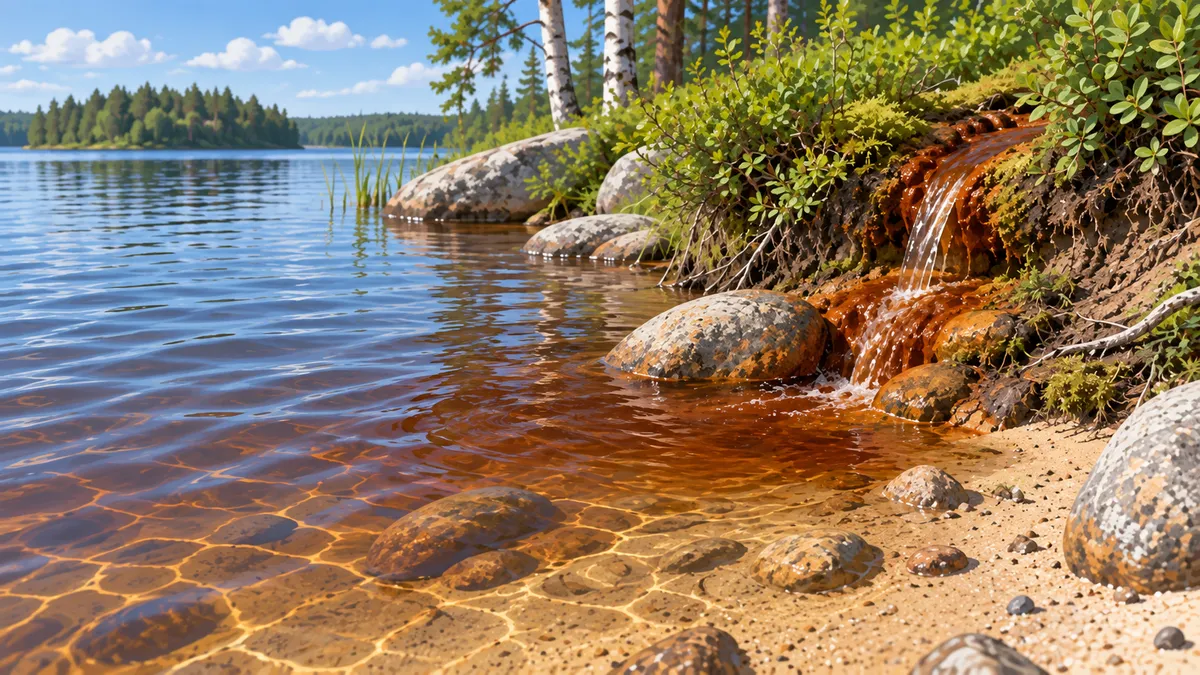
Humus is not the only substance that affects the brown color. In the water there can also be iron coming from the soil and bedrock. Iron can make the brown color even stronger. It comes into the lake with surface runoff and groundwater. Both substances come into the lake from the surrounding nature. They are not harmful to people in themselves.
When a Finnish lake looks brown, the reason is often in the surrounding land. Water carries humus into the lake especially from bogs and peatlands. Rain, snowmelt, and ditch drainage can bring more humus into the water. Iron can additionally strengthen the water’s brown shade. Tea-colored water can therefore be a natural characteristic of the lake.
Word bank
Every word as it appears in the text, its base form, what the ending does, and the meaning.
järvi · noun · genitive singular
of a lake
Go to this word in the text
heijastaa · verb · A infinitive
reflect
Go to this word in the text
humus · noun · elative singular
from humus
Go to this word in the text
aine · noun · partitive plural
substances
Go to this word in the text
muodostua · verb · present indicative, 3rd person singular
forms
Go to this word in the text
turvemaa · noun · adessive plural
on peatlands
Go to this word in the text
valuma-alue · noun · ablative singular
from a catchment area
Go to this word in the text
sadevesi · noun · genitive singular
of rainwater
Go to this word in the text
kulkea · verb · present indicative, 3rd person singular
flows
Go to this word in the text
kuljettaa · verb · present indicative, 3rd person singular
carries
Go to this word in the text
voimakkuus · noun · nominative singular
intensity
Go to this word in the text
vuodenaika · noun · nominative singular
season
Go to this word in the text
vaihdella · verb · A infinitive
vary
Go to this word in the text
kulkeutua · verb · A infinitive
be carried
Go to this word in the text
sulaa · verb · A infinitive
melt
Go to this word in the text
vesistö · noun · illative singular
into a body of water
Go to this word in the text
ojitus · noun · nominative singular
ditch drainage
Go to this word in the text
muokata · verb · present indicative passive
is worked
Go to this word in the text
kallioperä · noun · elative singular
from bedrock
Go to this word in the text
pintavalunta · noun · genitive singular
of surface runoff
Go to this word in the text
pohjavesi · noun · genitive singular
of groundwater
Go to this word in the text
haitallinen · adjective · partitive plural
harmful
Go to this word in the text
sulaminen · noun · nominative singular
melting
Go to this word in the text
luonnollinen · adjective · nominative singular
natural
Go to this word in the text
ominaisuus · noun · nominative singular
characteristic
Go to this word in the text
Practice
Choose a way to practise this story.
Comprehension quiz
Which substance usually gives Finnish lake water its brown color?
Where does humus enter the lake from?
When can the amount of humus entering the water increase?
What can iron do to the brown color of the water?
Fill in the gap
Vesi _____ humuksen puroihin, jokiin ja lopulta järviin.
Sama tapahtuu usein keväällä, kun lumi alkaa _____.