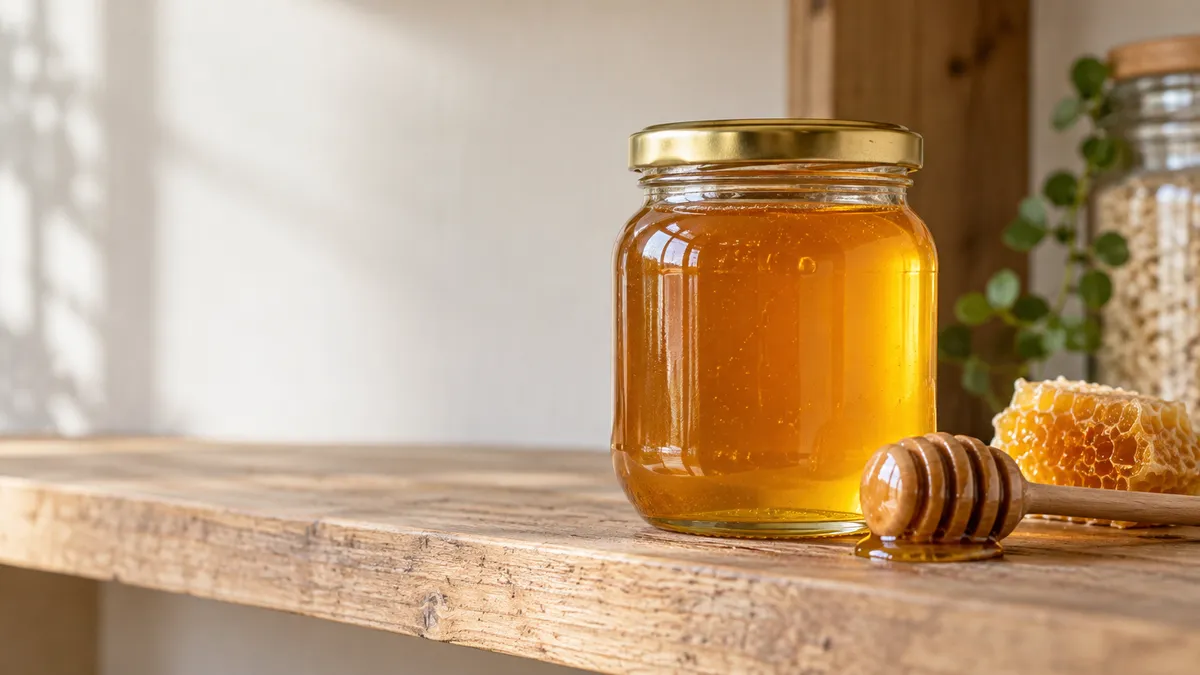
Many foods spoil because bacteria, yeasts, or molds begin to grow in them. Honey, however, behaves differently from many other foods. Mature honey can keep for a very long time without spoiling. The reason is not one substance, but many protective properties. The most important protections relate to the amount of water, sugar, and acidity.
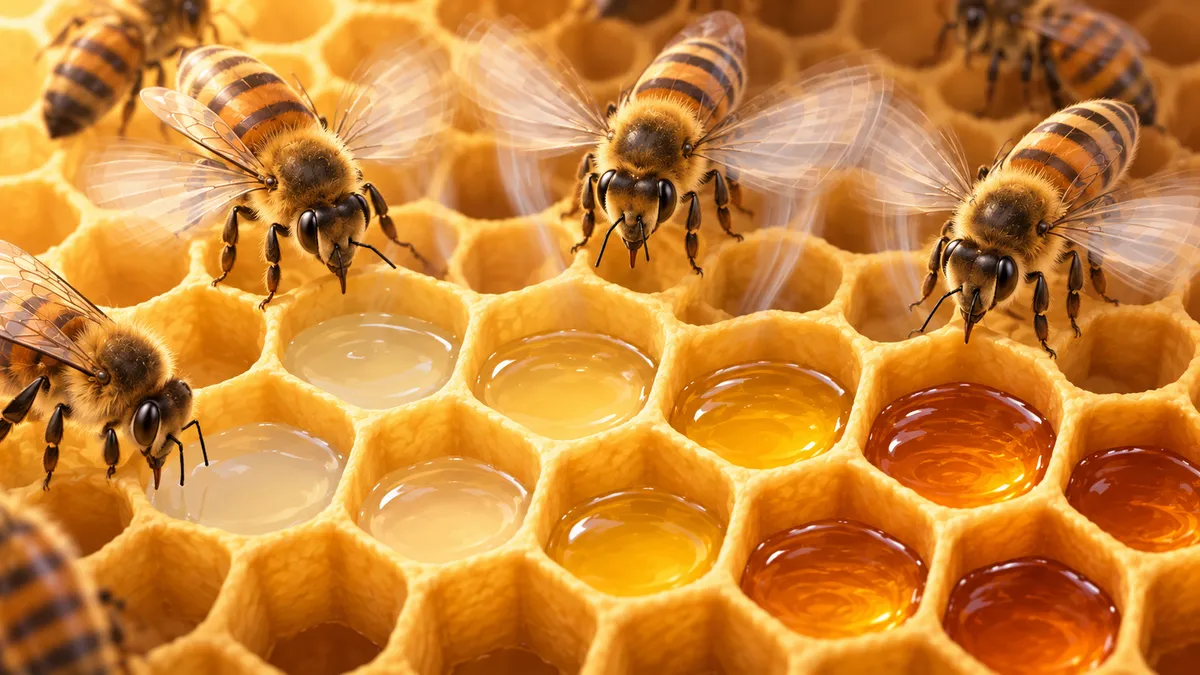
Flower nectar initially contains much more water than finished honey. Bees process the nectar in the hive and at the same time reduce its water. They spread nectar into the cells, where water gradually evaporates away. Mature honey has a lot of sugar and relatively little water. Microbes need free water so that they can grow. Honey's sugars bind a large part of the water tightly to themselves. Therefore, only a little free and usable water remains for microbes.
This availability of free water is usually described by the term water activity (vesiaktiivisuus). In mature honey, the water activity value is usually about 0.5–0.65. Most bacteria need a much higher value than this for growth. Yeasts and molds also need more free water. Honey's large amount of sugar also causes strong osmotic pressure. It pulls water out of the small cells of many microbes. In this way, honey makes the growth of many microbes very difficult.
Honey also protects itself from microbes with the help of its own acidity. Honey's pH value is usually between about 3.2 and 4.5. This acidity means that honey is clearly an acidic food. Honey contains several organic acids, for example a lot of gluconic acid. This acidity makes the normal growth of many bacteria in honey more difficult. Honey's acidity also works together with the small amount of water.
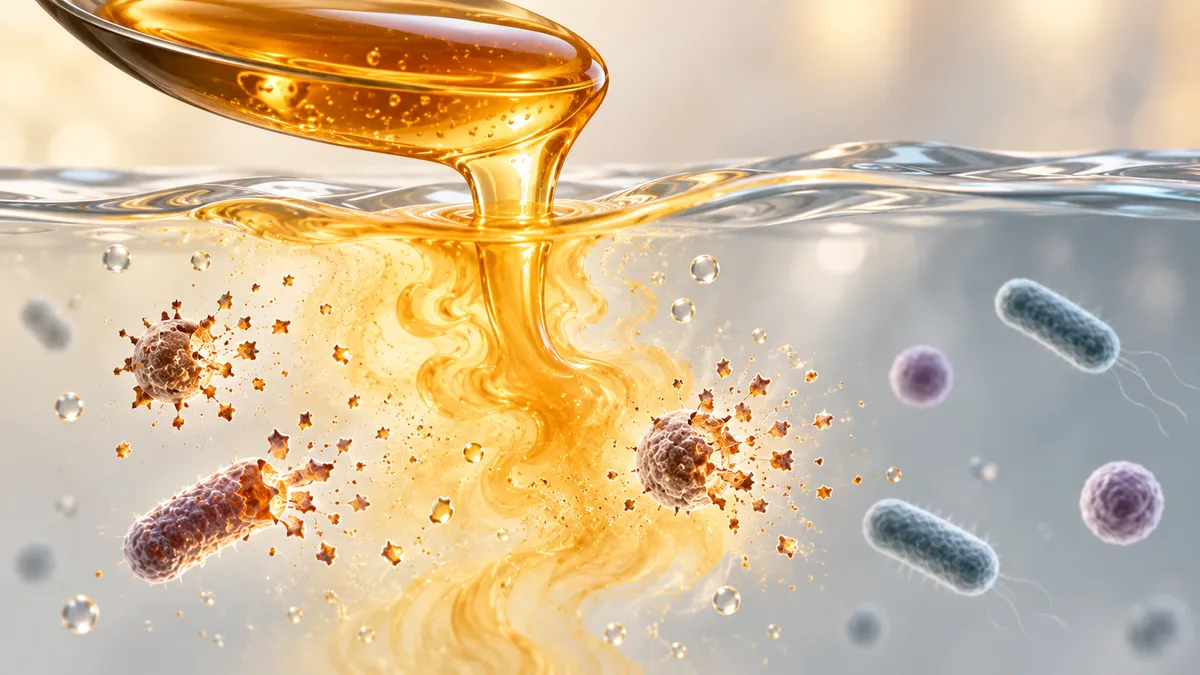
When bees process nectar, they also add different enzymes to it. One of these enzymes is glucose oxidase, which acts on glucose. When honey becomes diluted with water, this enzyme begins to work better. In this reaction, gluconic acid and hydrogen peroxide harmful to microbes are formed. Hydrogen peroxide can damage microbes and prevent their growth. This protection is important especially in slightly diluted honey. In ordinary thick honey, low water activity is still an important protection.
Honey, however, does not stop all microbes in all conditions. If honey has too much water, some yeasts can grow. They can use honey's sugars and start fermentation. Then honey's taste, smell, and texture can change. Diluted honey or honey collected too early also spoils more easily. Therefore, the small amount of water in mature honey is so important. Therefore, it is not advisable to mix extra water into honey being stored.
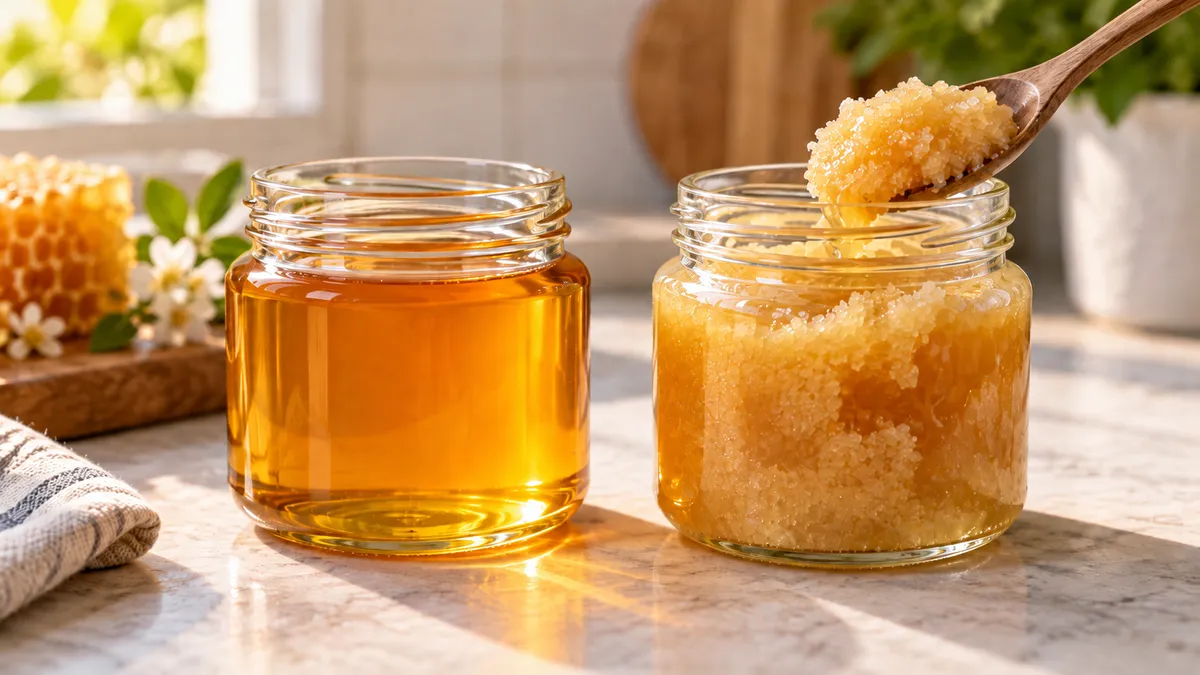
Honey can also change visibly without actual spoilage. For example, the glucose in honey can form small crystals in it. Then liquid honey gradually becomes thick or grainy. This natural change is usually simply called honey crystallization (kiteytyminen). Crystallized honey can look strange or even spoiled. Still, crystallization alone does not mean that honey is spoiled. It is a common change in many honeys during storage.
Honey's long shelf life therefore comes from several protections working together. There is a lot of sugar, but little free water. In addition, honey is acidic and contains protective enzymes. These conditions prevent the normal growth of many microbes in honey. Therefore, mature honey keeps for a very long time when stored correctly. If too much water gets in, however, this balance can change. Honey is therefore a durable food, but changes can happen to it too.
Word bank
Every word as it appears in the text, its base form, what the ending does, and the meaning.
pilaantua · verb · present third-person plural
spoil
Go to this word in the text
suojaava · adjective · partitive singular
protective
Go to this word in the text
happamuus · noun · illative singular
to acidity
Go to this word in the text
mesi · noun · partitive singular
nectar
Go to this word in the text
kenno · noun · illative plural
into the cells
Go to this word in the text
haihtua · verb · present third-person singular
evaporates
Go to this word in the text
vapaa · adjective · partitive singular
free
Go to this word in the text
sitoa · verb · present third-person plural
bind
Go to this word in the text
vesiaktiivisuus · noun · nominative singular
water activity
Go to this word in the text
kasvaminen · noun · illative singular
for growth
Go to this word in the text
osmoottinen · adjective · genitive singular
osmotic
Go to this word in the text
happamuus · noun · genitive singular with third-person possessive suffix
its acidity
Go to this word in the text
hapan · adjective · nominative singular
acidic
Go to this word in the text
glukonihappo · noun · partitive singular
gluconic acid
Go to this word in the text
entsyymi · noun · partitive plural
enzymes
Go to this word in the text
laimentua · verb · present third-person singular
becomes diluted
Go to this word in the text
vetyperoksidi · noun · partitive singular
hydrogen peroxide
Go to this word in the text
vahingoittaa · verb · first infinitive
to damage
Go to this word in the text
käyminen · noun · genitive singular
fermentation
Go to this word in the text
kerätä · verb · past passive participle, nominative singular
collected
Go to this word in the text
kiteytyminen · noun · translative singular
as crystallization
Go to this word in the text
kiteytyä · verb · past active participle, nominative singular
crystallized
Go to this word in the text
säilyvyys · noun · nominative singular
shelf life
Go to this word in the text
säilyttää · verb · past passive participle, essive singular
when stored
Go to this word in the text
Practice
Choose a way to practise this story.
Comprehension quiz
Why do microbes have little water to use in mature honey?
What can happen if honey has too much water?
What does crystallization by itself tell us about honey?
Fill in the gap
Ne levittävät mettä kennoihin, joissa vettä _____ vähitellen pois.
Vetyperoksidi voi _____ mikrobeja ja estää niiden kasvua.