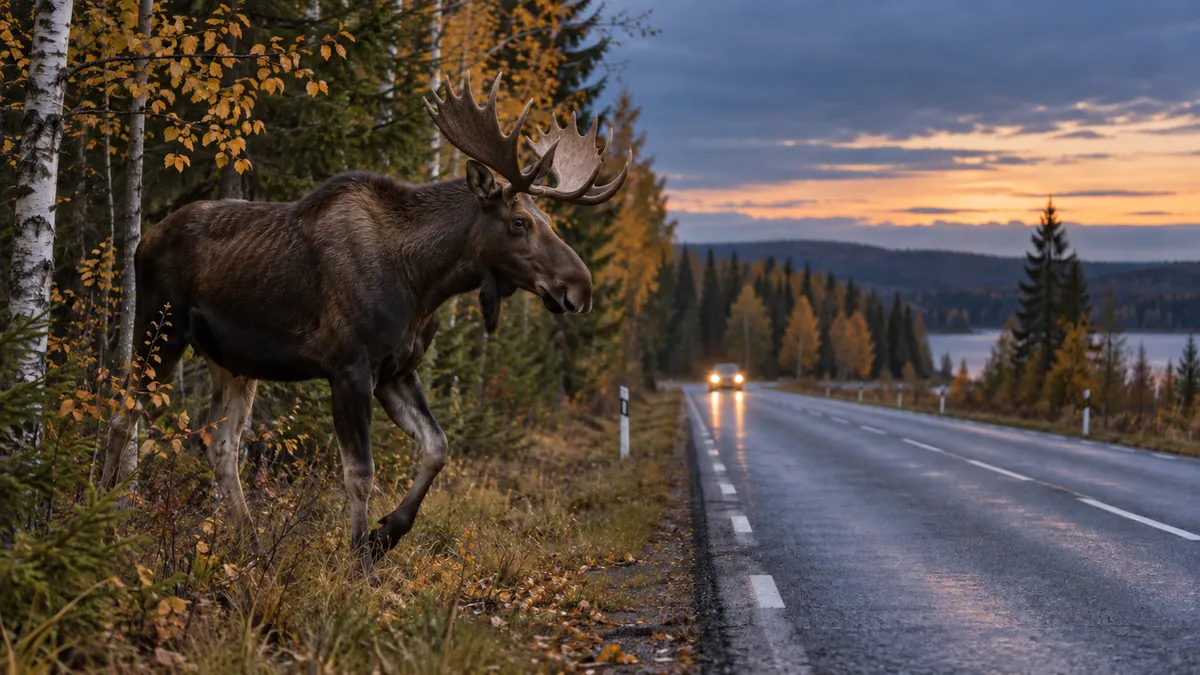
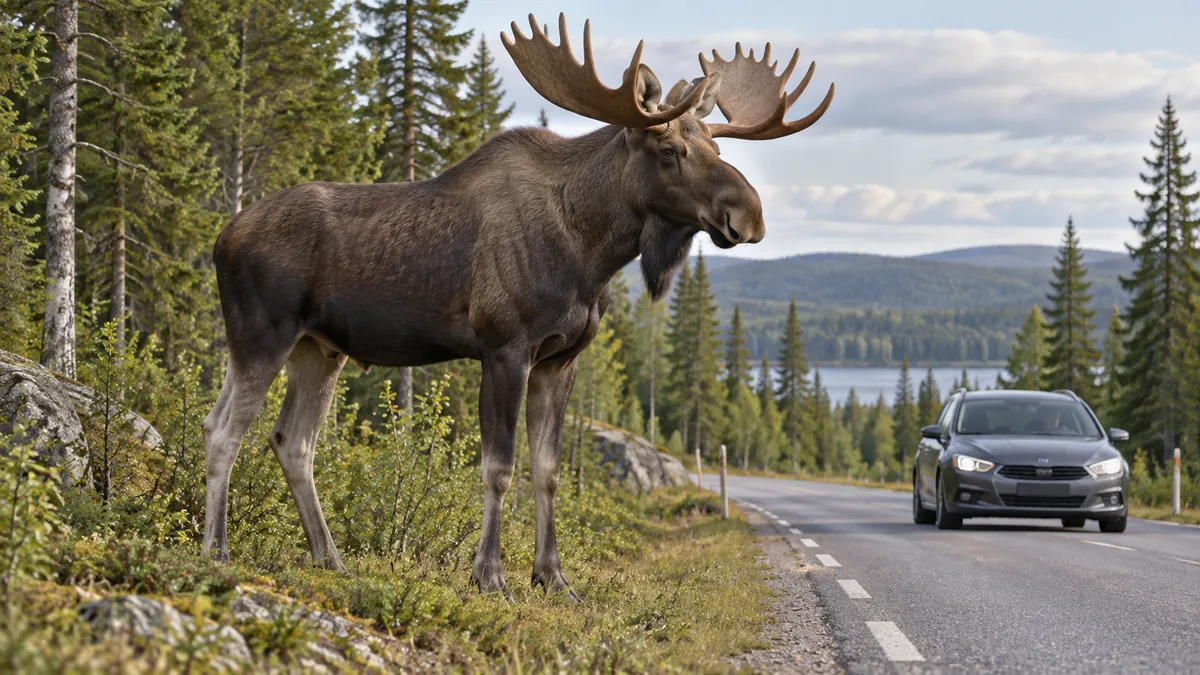
On Finland's roads, every year there are many collisions with different animals. Most collisions happen in Finland with white-tailed deer or roe deer. There are fewer moose collisions, but the moose is especially dangerous to people. It is much larger and taller than a deer. Therefore a moose collision can cause serious injuries inside the car.
An adult moose is a large animal that has long legs. A bull moose can weigh up to 600 kilograms and be about two metres tall. Its body can be up to three metres long. The moose's large size increases the danger of a collision for the car's passengers. Liikenneturva reminds us that a lower speed can reduce injuries in a collision.
In 2025, 13,291 game-animal accidents occurred on the roads of mainland Finland. In Finland in 2025, there were collisions with white-tailed deer a total of 6,364 times. With roe deer, there were 4,948 collisions in the same year. Moose collisions occurred in the same year a total of 1,814 times. There were therefore fewer moose collisions than deer and roe-deer collisions. In the same year, five people died and 133 were injured in animal collisions. Four of the five collisions that led to death occurred with a moose. In addition, 81 percent of all injuries occurred in moose accidents in 2025. These figures show why the moose is especially dangerous to people.
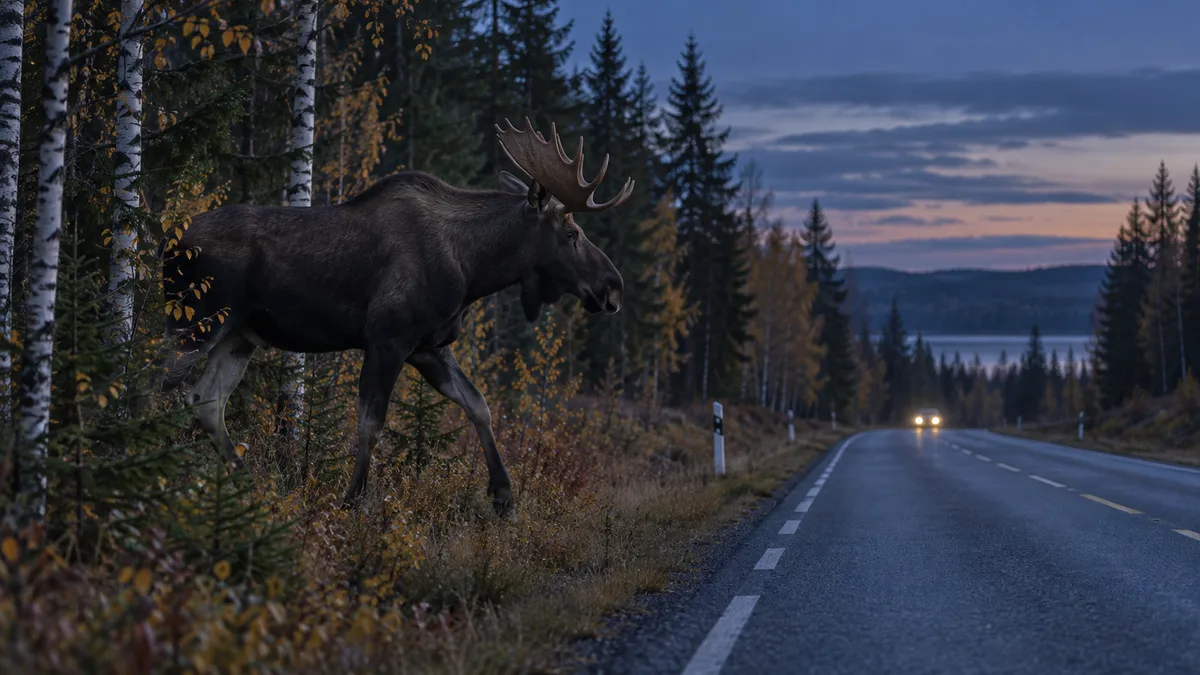
One can collide with a moose in all seasons in different parts of Finland. The risk is, however, higher than usual at twilight and in darkness. Nearly two thirds of cervid collisions happen at twilight or in darkness. Over a 24-hour period, the most collisions happen one hour after sunset. Moose also move actively during morning and evening twilight. Therefore the driver must watch the roadsides especially carefully.
In autumn, moose move a lot, so collision risk increases on the roads. Another busy period starts in May and continues into June. Then moose cows separate the previous year's calves from themselves. Young moose are not yet used to moving alone. They can come onto the road also in very unexpected places. Then there may not necessarily be a traffic sign nearby that warns about moose.
When you see a moose warning sign, reduce speed and concentrate on driving. A lower speed gives more time to see and brake. It can also reduce injuries if a collision happens. Always keep also a sufficient following distance to the car ahead. Use high beams whenever they can be used safely. Watch especially the roadsides for the whole duration of the dangerous area. If a moose runs onto the road, try to steer behind it.
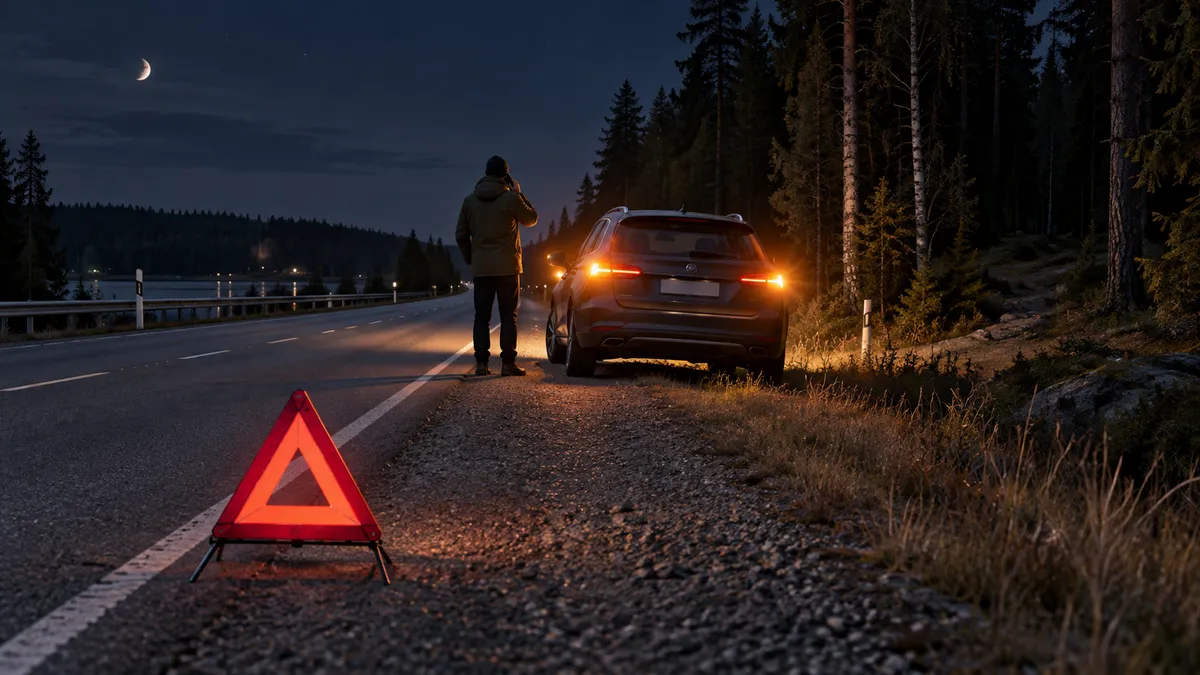
If you collide with a moose, stop the car in as safe a place as possible. Turn on the hazard lights and immediately warn other traffic. First check calmly whether any of the car's passengers is injured. After that, always call the general emergency number, that is number 112. A cervid collision must be reported to the police, even if the moose continues on its way. Also tell the emergency response centre the accident location as accurately as possible during the call. Also mark accurately the place from which the animal disappeared into the forest.
A deer or roe deer comes onto the road much more often than a moose. The moose is still an especially dangerous animal on Finland's roads. It can come onto the road quickly, and one does not always notice it in time. A warning sign tells about a place where the risk is higher than usual. The best protection is a more moderate speed and careful observation. When you drive proactively, you have more time to react.
Word bank
Every word as it appears in the text, its base form, what the ending does, and the meaning.
teillä
on the roads
noun
The plural of tie — the form you look up. It stands in Adessiivi (the adessive case).
kolareita
collisions
noun
The plural of kolari — the form you look up. It stands in Partitiivi (the partitive case).
eläinten
of animals
noun
The plural of eläin — the form you look up. The ending -ten marks Genetiivi (the genitive case).
vaarallinen
dangerous
adjective
This is the dictionary form itself, standing in Nominatiivi (the nominative case).
suurempi
larger
adjective
The singular of suuri — the form you look up. It stands in Nominatiivi (the nominative case).
vammoja
injuries
noun
The plural of vamma — the form you look up. It stands in Partitiivi (the partitive case).
pitkät
long
adjective
The plural of pitkä — the form you look up. The ending -t marks Nominatiivi (the nominative case).
painaa
to weigh
verb
A verb in its basic form — the one a dictionary lists, before it is tied to a person.
matkustajille
for the passengers
noun
The plural of matkustaja — the form you look up. It stands in Allatiivi (the allative case).
riistaonnettomuutta
game-animal accidents
noun
The singular of riistaonnettomuus — the form you look up. It stands in Partitiivi (the partitive case).
kolaroitiin
collided / there were collisions
verb
loukkaantui
was injured
verb
hirvieläinkolareista
of cervid collisions
noun
The plural of hirvieläinkolari — the form you look up. It stands in Elatiivi (the elative case).
auringonlaskun
of sunset
noun
The singular of auringonlasku — the form you look up. The ending -n marks Genetiivi (the genitive case).
tarkkailla
to watch
verb
A verb in its basic form — the one a dictionary lists, before it is tied to a person.
kolaririski
collision risk
noun
This is the dictionary form itself, standing in Nominatiivi (the nominative case).
hirviemot
moose cows
noun
The plural of hirviemo — the form you look up. The ending -t marks Nominatiivi (the nominative case).
vieroittavat
separate / wean
verb
yllättävissä
in unexpected places
adjective
The plural of yllättävä — the form you look up. It stands in Inessiivi (the inessive case).
hirvivaaramerkin
moose warning sign
noun
The singular of hirvivaaramerkki — the form you look up. It stands in Genetiivi (the genitive case).
turvaväli
safe following distance
noun
This is the dictionary form itself, standing in Nominatiivi (the nominative case).
kaukovaloja
high beams
noun
The plural of kaukovalo — the form you look up. The ending -ja marks Partitiivi (the partitive case).
väistää
to avoid / steer around
verb
A verb in its basic form — the one a dictionary lists, before it is tied to a person.
hätävilkut
hazard lights
noun
The plural of hätävilkku — the form you look up. It stands in Nominatiivi (the nominative case).
hätänumeroon
to the emergency number
noun
The singular of hätänumero — the form you look up. The ending -on marks Illatiivi (the illative case).
ilmoittaa
to report
verb
A verb in its basic form — the one a dictionary lists, before it is tied to a person.
onnettomuuspaikka
accident location
noun
This is the dictionary form itself, standing in Nominatiivi (the nominative case).
reagoida
to react
verb
A verb in its basic form — the one a dictionary lists, before it is tied to a person.
Practice
Choose a way to practise this story.
Comprehension quiz
0/0
Question 1 of 4
Which animal has fewer collisions than white-tailed deer and roe deer, but causes serious consequences for people?
Question 2 of 4
When is the risk of a cervid collision higher?
Question 3 of 4
What should a driver do when seeing a moose warning sign?
Question 4 of 4
After a collision with a moose, which number must be called?
Fill in the gap
0/0
Hirvikolareita on vähemmän, mutta hirvi on ihmiselle erityisen .
There are fewer moose collisions, but the moose is especially dangerous to people.
Käytä aina, kun niitä voi käyttää turvallisesti.
Use high beams whenever they can be used safely.
Soita sen jälkeen aina yleiseen eli numeroon 112.
After that, always call the general emergency number, that is number 112.
Match the words
0/0
Pick a Finnish word, then pick its meaning.
Dictation
0/0
Ready to listen
Listen closely, then write the Finnish sentence you hear. You can listen again as many times as you need.
Enter to check or go to the next sentence · Shift + Enter for a new line
0:004:20
The Moose Is the Most Dangerous Animal on Finland’s Roads